
Gaining Weight in Perimenopause Despite Exercise? The Root Cause Explained

You’ve done the HIIT classes.
You’ve swapped the sourdough for kale salads.
You’ve even dusted off the Peloton and pushed through the exhaustion, even when your body was screaming for a nap.
And yet? The scale hasn't budged. In fact, it might even be creeping up. Specifically around your middle. That stubborn "thickening" that seems to have appeared out of nowhere.
It’s infuriating. It’s soul-destroying. And if one more person tells you to "just eat less and move more," you might actually scream.
I hear you. I see you. And most importantly? It is not your fault.
You aren't lazy. You haven't lost your willpower. Your body hasn't "broken", it’s simply changed the rules of the game without giving you the updated rulebook.
Today, we’re going to tear up the old rules and look at what’s actually happening under the hood.
The "Calories In vs. Calories Out" Myth
For decades, we’ve been told that weight loss is a simple mathematical equation. Burn more than you consume, and the weight disappears.
But then perimenopause hits.
Suddenly, that equation stops working. You can be in a calorie deficit, running 5Ks, and still feel like you’re inflating.
The truth? Your hormones are the primary drivers of your metabolism, not just your treadmill settings. When your estrogen and progesterone start their chaotic perimenopausal dance, they take your insulin sensitivity and stress response along for the ride.

Root Cause #1: The Insulin Resistance Trap
In your 20s and 30s, your body was likely quite efficient at processing carbohydrates. You’d eat, your blood sugar would rise, insulin would usher that energy into your cells, and life went on.
In perimenopause, declining estrogen makes your cells "deaf" to insulin.
This is Insulin Resistance.
Instead of using that salad or those oatcakes for energy, your body struggles to process the glucose. Your pancreas pumps out even more insulin to compensate. And here is the kicker: Insulin is a fat-storage hormone.
When insulin is high, your body physically cannot burn stored body fat. It’s like the door to your fat stores is locked, and insulin has the only key, but it’s busy trying to manage your blood sugar instead.
This is why you feel "hangry," tired after eating, and why that weight around your belly refuses to move. It’s not a calorie problem. It’s a chemistry problem.
Root Cause #2: The Cortisol Connection (The "Worry Waist")
Let’s talk about that Peloton.
I love exercise. I really do. But for a woman in her late 40s whose hormones are already in flux, high-intensity exercise can sometimes do more harm than good.
Why? Cortisol.
Cortisol is your stress hormone. Perimenopause is already a stressful time for the body. Add in a high-pressure job, family demands, and poor sleep (thanks, night sweats), and your cortisol levels are already simmering.
When you add a 45-minute "fat-burning" HIIT session on top of that, your body doesn't think, "Oh, Sarah is getting fit." It thinks, "Sarah is being chased by a lion!"
In response, it holds onto every ounce of fat it can: especially around your vital organs: as a survival mechanism.
The result? You’re exhausted, your joints ache, and you’re actually gaining weight because you’re over-stressing an already stressed system.
"But I'm doing everything right..."
I hear this from my clients every single day.
"Lucy, I'm eating 1,200 calories. I'm hitting 10,000 steps. Why do I look five months pregnant by 4 PM?"
The frustration is real. It’s that feeling of being a stranger in your own skin. You look in the mirror and don't recognise the silhouette staring back.
But here is the shift we need to make: You cannot exercise your way out of a hormonal imbalance.

Why Traditional Weight Loss Advice Fails Sarah (and You)
Most fitness apps and "diet" plans are designed for men or younger women. They don't account for:
Muscle Loss (Sarcopenia): As estrogen drops, we lose muscle mass. Muscle is metabolically active; the less you have, the fewer calories you burn at rest.
The 3 AM Wake-up Call: Poor sleep wreaks havoc on ghrelin (the hunger hormone) and leptin (the fullness hormone). You end up craving sugar just to survive the afternoon slump. (Read more about waking up at 3 am here).
Digestive Shifts: Bloating is often mistaken for fat gain, but it’s often a sign that your gut microbiome is struggling with the hormonal shift.
So, if "eating less and moving more" is the wrong path, what is the right one?
Introducing the FRESH Framework™
I created the FRESH Framework™ specifically for women like you. Women who are high-achieving, busy, and tired of the "standard" advice that simply doesn't work for a perimenopausal body.
We don't do "diets." We do Personalised Nutrition.
The FRESH Framework™ focuses on five key pillars to reset your metabolism and get you feeling like you again:
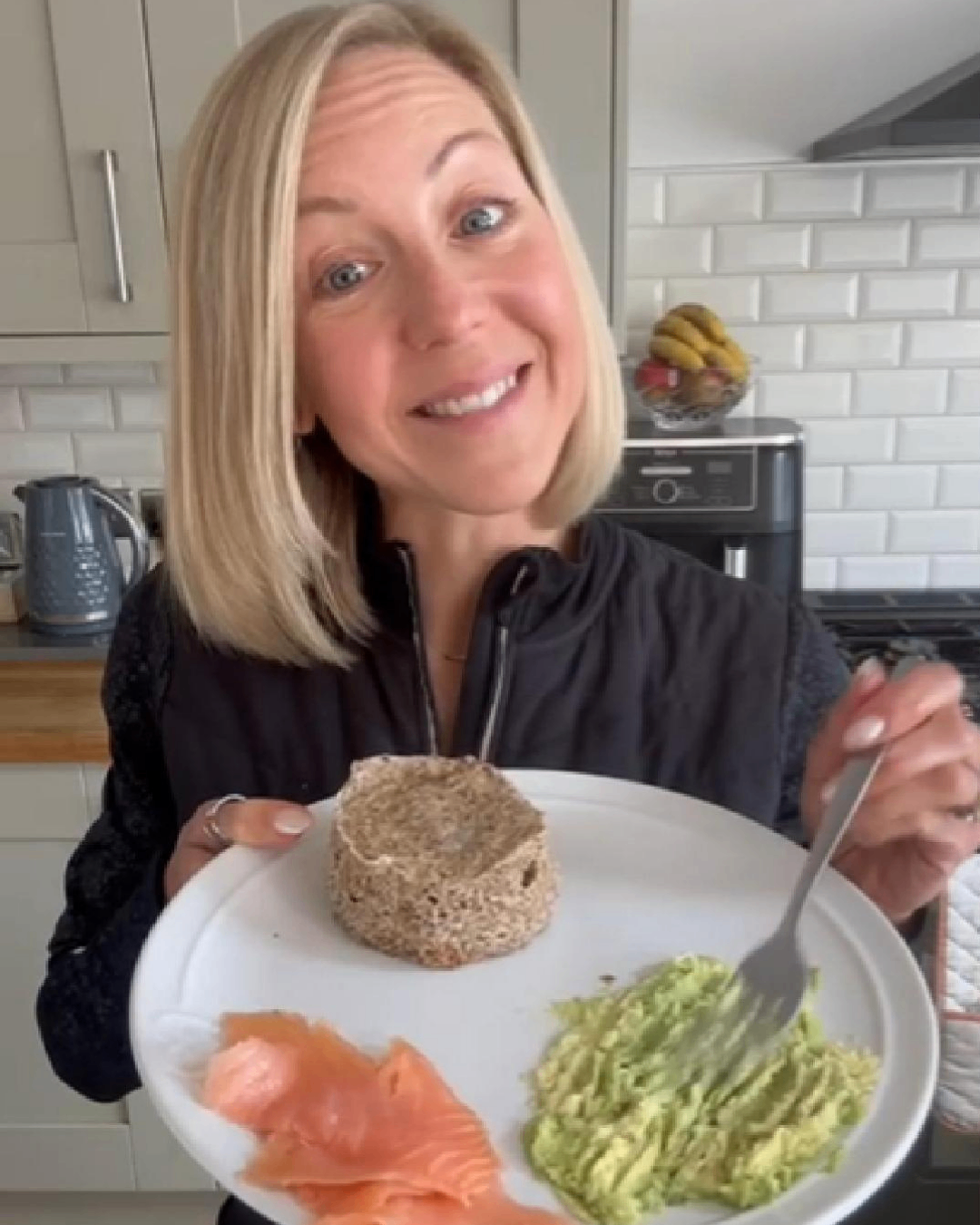
F - Fueling for Hormones: Learning how to eat to blunt the insulin spike. No more "rabbit food." We focus on protein, healthy fats, and fiber-rich carbs that keep you full and your blood sugar stable.
R - Restoring the Gut: Addressing the bloating and ensuring your body can actually absorb the nutrients you’re giving it.
E - Emotional Wellbeing & Cortisol Management: Switching the "grind" for "glow." This might mean trading one Peloton session for strength training or restorative yoga to lower that cortisol floor.
S - Sleep & Stress Recovery: Prioritising the biological foundations that allow your body to release fat.
H - Hormonal Harmony: Understanding your specific cycle (or lack thereof) to time your nutrition and movement perfectly.
The Pivot: How to Start Seeing Results
If you want to stop the weight creep, we have to change the strategy. Here are three things you can do today to start supporting your body instead of fighting it:
Prioritise Protein: Aim for 25-30g of protein at every meal. This protects your muscle mass and keeps you satiated, reducing those mid-afternoon biscuit raids.
Lift Heavy Things: If you’re only doing cardio, stop. Resistance training is the "fountain of youth" for perimenopausal women. It improves insulin sensitivity more effectively than running ever will.
Stop the "Scarcity" Mindset: Eating too little tells your body it’s in a famine. When you’re in perimenopause, your body needs more nutrients (vitamins, minerals, amino acids), not fewer.
You Don't Have to Figure This Out Alone
I know it feels overwhelming. You’ve spent years being the one who "has it all together," and suddenly, your own body feels like a puzzle you can't solve.
You might be wondering if this is just "it" now. If you just have to accept the weight gain, the brain fog, and the fatigue as part of getting older.
I’m here to tell you: Absolutely not.
You can feel vibrant. You can feel strong. You can fit into those jeans in the back of your wardrobe without having to starve yourself or spend hours on a bike going nowhere.
But you need a science-based, evidence-backed plan that treats the root cause, not just the symptoms.

Ready to Reclaim Your Body?
If you’re ready to stop guessing and start following a framework designed for your biology, I’m here to help.
Whether it's dealing with hot flushes or that stubborn midlife weight gain, we can create a plan that works for your life.
How we can work together:
✅ The 'Lean On Lucy' Programme: This is my signature 1-1 coaching experience. We dive deep into your bloodwork, your lifestyle, and your goals to implement the FRESH Framework™ in a way that feels sustainable and empowering. Explore the Lean On Lucy Programme here.
✅ Book a Consultation: Not sure where to start? Let’s have a chat. We’ll look at where you are, where you want to be, and how we can bridge that gap together. Book your 1-1 Consultation here.
You’ve spent your life looking after everyone else. It’s time to put that same energy back into yourself.
Let's get you back to feeling like you.
With love and support,
Lucy x
SEO Block
URL Slug: gaining-weight-perimenopause-despite-exercise-uk
SEO Title: Gaining Weight in Perimenopause Despite Exercise? The Root Cause
Meta Description: Are you exercising but still gaining weight in perimenopause? Discover why insulin resistance and cortisol are the real culprits and how the FRESH Framework™ can help.
Keywords: gaining weight in perimenopause despite exercise, insulin resistance menopause weight gain, cortisol and menopause weight gain, evidence based menopause support, science based menopause coaching, menopause weight loss UK, perimenopause weight gain help Sarah.
Alt Text for Featured Image: A frustrated midlife woman looking at a scale, representing the struggle of gaining weight in perimenopause despite regular exercise and healthy eating.
Comments