
Gaining Weight in Perimenopause Despite Exercise? The Root Cause Explained

You’re doing everything right.
The morning runs. The HIIT classes. The virtuous salads for lunch. The tracking apps that tell you you’re in a deficit. You’re working harder than you ever have, yet the scale is creeping up. Or maybe it’s not just the scale, it’s the way your clothes fit. Your favorite jeans feel like an endurance test. Your middle feels... soft. Different.
It’s frustrating. It’s exhausting. And if we’re being honest? It feels like a total betrayal.
You’re a professional. You’re used to working hard and getting results. In your 20s and 30s, if you wanted to drop a few pounds, you just "ate less and moved more." It worked. Every time.
But now? You’re 47, living in the thick of a busy UK career, and that old formula has completely snapped. You’re gaining weight in perimenopause despite exercise, and no one seems to be able to tell you why without suggesting you just "try harder."
Here’s the truth: It’s not your willpower. It’s your biochemistry.
The Mystery of the "Midlife Spread"
Let’s talk about Sarah. Sarah is 47, a high-flying professional, and she’s essentially you. She came to me because she was "doing everything right" but felt like she was wearing a literal spare tire she hadn't invited to the party.
She was spinning her wheels, literally, on a Peloton five days a week. She was exhausted, living on black coffee and adrenaline, and wondering why her body was suddenly a stranger.
The worst part? The shame. The feeling that she’d somehow "let herself go" despite being more disciplined than ever.
If that’s you, I want you to take a deep breath.
Your body isn't broken. It's changing. And the rules of engagement have changed with it. When you’re gaining weight in perimenopause despite exercise, your body isn't asking for more sweat, it's asking for a different kind of support.
The Root Cause: The Hormone Triple Threat
Why does the "Eat Less, Move More" mantra fail so spectacularly in midlife? Because it ignores the three hormonal heavyweights that take over during perimenopause: Estrogen, Insulin, and Cortisol.
1. The Estrogen Exit
As estrogen begins its chaotic decline, your body looks for other ways to produce it. Guess where one of those sources is? Fat cells. Specifically, visceral fat (the kind around your middle). Your body is essentially trying to protect you by holding onto fat to keep some level of estrogen circulating.
But there’s a catch. This shift also makes you more insulin resistant.
2. The Insulin Shift
Insulin is your "storage hormone." In your younger years, your body was quite efficient at turning your food into energy. Now, as hormones fluctuate, your cells become a bit "deaf" to insulin’s signals. Instead of burning that healthy salad for fuel, your body is more likely to shuttle it straight into storage.
This is why you feel tired even though you’re eating "clean." The energy isn't getting into your cells; it's going to your waistline.
3. The Cortisol Trap
This is the one that surprises most women. Cortisol is your stress hormone. And guess what perimenopause is to your body? A massive internal stressor.
When you add intense, soul-crushing cardio or calorie restriction on top of perimenopausal shifts and a high-pressure job, your cortisol levels skyrocket. Your body enters "survival mode." It thinks there’s a famine or a predator nearby, so it holds onto every single calorie for dear life.
More exercise + less food = more stress = more belly fat.
It’s a cruel irony, isn’t it?

Why Your Current Workout Might Be Backfiring
I see it every day. Women doubling down on their cardio when the weight starts to creep up. They run further. They jump higher. They sweat more.
But in perimenopause, long bouts of intense cardio can actually be counterproductive. They keep your cortisol levels chronically high, which signals your body to store fat and, worst of all, break down muscle.
Muscle is your metabolic currency. It’s what keeps your "engine" humming at rest. As we age, we naturally lose muscle mass (sarcopenia). When you lose muscle, your metabolism slows down.
If you are gaining weight in perimenopause despite exercise, you probably don't need more cardio. You need to change the type of stimulus you're giving your body.
The Fix: Lift Heavy Shit
(Yes, I said it.)
Strength training is the non-negotiable for midlife health. We’re not talking about those tiny pink dumbbells. We’re talking about challenging your muscles. When you build muscle, you improve your insulin sensitivity. You essentially create more "sinks" for glucose to go, meaning you burn fuel more efficiently even while you’re sleeping.
Move away from: Chronic cardio and "punishment" workouts.
Move towards: Heavy lifting 2-3 times a week and plenty of low-intensity movement like walking.
The PFF Formula: Eating for Hormone Balance
If the "Move More" part of the equation needs a rethink, the "Eat Less" part needs a total overhaul.
In perimenopause, your body is highly sensitive to blood sugar spikes. That "healthy" granola or the fruit smoothie you’ve been having? It might be sending your insulin through the roof.
To combat this, I teach my clients the PFF Formula:
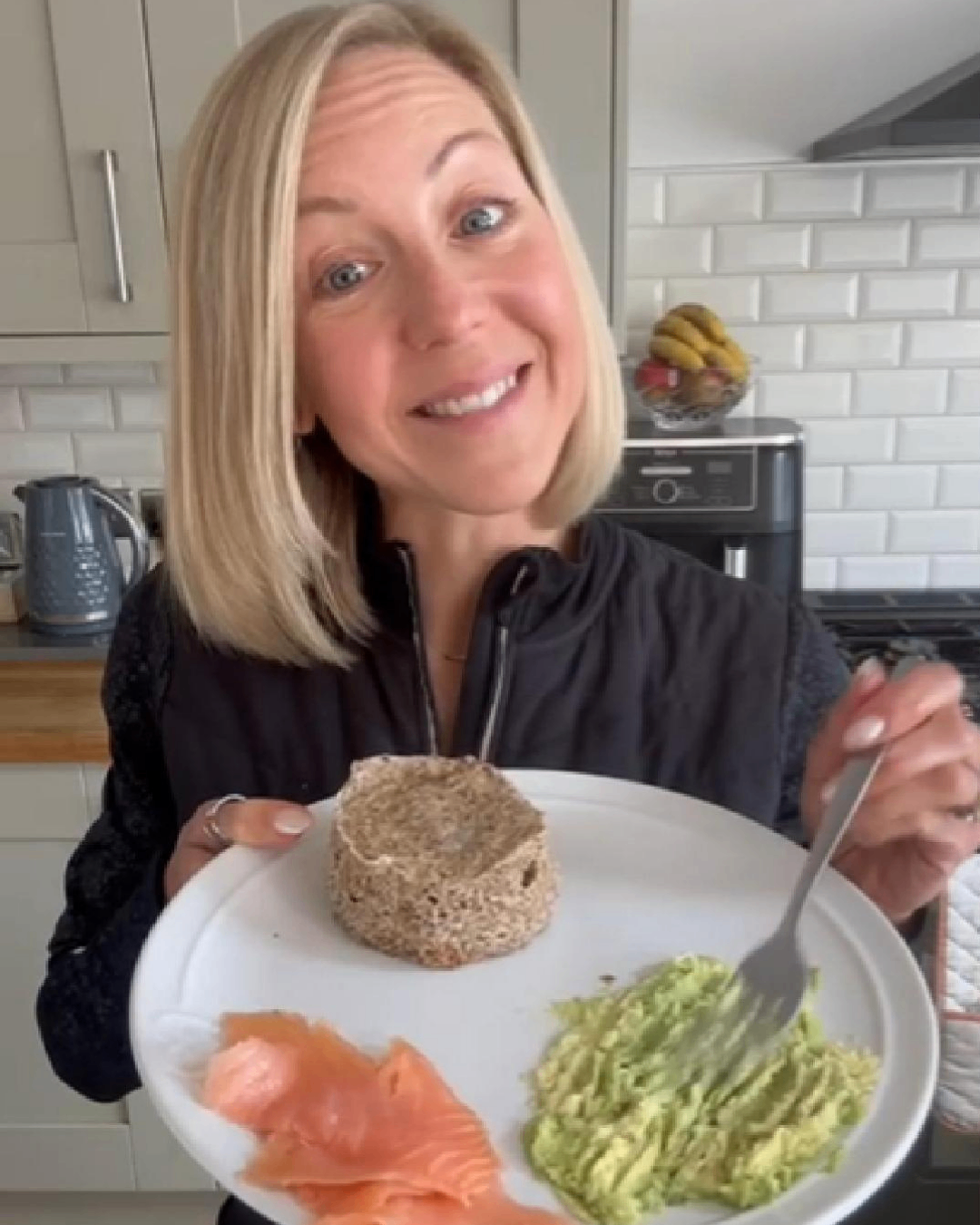
P is for Protein: This is your best friend. Protein keeps you full, supports muscle repair, and has a high thermic effect (your body burns more calories just digesting it). Aim for 25-30g per meal.
F is for Fiber: Fiber slows down the absorption of sugar, keeping your insulin levels stable. Think leafy greens, cruciferous veg, and seeds.
F is for Healthy Fats: Don't fear the fat! Avocado, olive oil, and nuts are essential for hormone production and keep those "hangry" cravings at bay.
When you base your meals on Protein, Fiber, and Fat, you stop the blood sugar roller coaster. You stop the sugar cravings that lead to the 3 PM biscuit tin raid.
Introducing the FRESH Framework™
At Health Coach Lucy, I don't believe in one-size-fits-all diets or grueling exercise regimes. I believe in working with your biology, not against it.
That’s why I created the FRESH Framework™. It’s a holistic approach designed specifically for women like you: women who are juggling a lot and need a plan that actually works in the real world.
F – Food as Fuel: Moving away from restriction and towards nourishment (The PFF Formula).
R – Restoration & Sleep: Addressing the sleep deprivation that drives weight gain.
E – Exercise with Purpose: Swapping the cardio-drain for muscle-building and metabolic health.
S – Stress Management: Lowering the cortisol levels that keep the weight "stuck."
H – Hormone Harmony: Understanding the root cause and supporting your body through the transition.
This isn't about a "quick fix." It's about a fundamental shift in how you care for yourself. It’s about moving from a place of "fighting your body" to a place of "supporting your body."
You Don't Have to Do This Alone
The truth? Perimenopause can be a lonely place. Your GP might tell you "it's just your age." Your friends might be struggling too. You might feel like you should be able to figure this out on your own.
But you don't have to.
If you’re tired of the brain fog, the sleepless nights, and the frustration of gaining weight in perimenopause despite exercise, there is a path forward.
You can reclaim your energy. You can feel like yourself again. You can stop the "weight creep" without spending three hours a day in the gym.
Ready to take the next step?
I offer a few ways to support you:
Lean On Lucy: My signature program designed to give you the tools, the community, and the expert guidance to navigate perimenopause with confidence. Check out Lean On Lucy here.
Book a Consultation: If you want a deep dive into your specific symptoms and a personalized roadmap, let’s chat. Book your 1:1 consultation here.
The Hormone Imbalance Quiz: Not sure where to start? Take the quiz to see which hormones might be driving your symptoms. Take the quiz here.

Final Thoughts
The weight gain isn't a failure. It's a signal.
Your body is telling you that the old ways of operating are no longer serving you. It’s asking you to slow down, nourish deeply, and build strength.
It’s time to stop the "punishment" workouts and the restrictive dieting. It’s time to start listening to what your body actually needs to thrive in this new chapter.
You’ve spent years taking care of everyone else: your career, your family, your home. Now? It’s your turn.
Let’s get you feeling vibrant, strong, and back in control.
Because you deserve to feel like the best version of yourself, regardless of the date on your birth certificate.
Want more tips? Check out my recent post on using a CGM to balance your hormones or read more about managing vaginal dryness in perimenopause.
Comments