
It's Not Your Willpower: The Real Reason for Perimenopause Belly Fat (And How to Reset)

You're doing everything right.
The same workouts that used to keep you toned. The same meals that never caused problems before. Maybe you've even increased your exercise and decreased your portions.
And yet.
That lower belly keeps expanding. Your jeans feel tighter every month. And somewhere in the back of your mind, a voice whispers: "You've lost control."
Let me stop you right there.
This isn't about willpower.
It's not about trying harder, eating less, or pushing through more brutal HIIT sessions at 6 AM. What's happening to your body right now? It's a profound hormonal and metabolic shift that has absolutely nothing to do with your discipline or dedication.
You're not failing. Your body is changing. And once you understand why, you can finally work with it instead of against it.
The Hormonal Reality No One Talks About
Here's what's actually happening inside your body during perimenopause:
Your estrogen levels are declining. Not gradually. Not predictably. They're fluctuating wildly: surging one week, plummeting the next: like a hormonal rollercoaster you never bought a ticket for.
And estrogen? It's been your metabolic ally for decades.
When estrogen is balanced, it naturally directs fat storage to your hips, thighs, and buttocks. But as it drops during perimenopause, your body loses those instructions. Fat storage shifts dramatically to your abdomen instead.
At the same time, available testosterone increases (because estrogen isn't there to keep it in check), which further triggers that stubborn menopause belly fat to accumulate right around your middle.
But it gets worse.
The fat that accumulates isn't just sitting there looking unflattering in your favorite dress. It's visceral fat: the deep abdominal fat that wraps around your internal organs. This type of fat is hormonally active, meaning it actually produces inflammatory compounds that make your hormonal imbalances worse.
It's a vicious cycle. And you can't willpower your way out of a hormonal shift.
Why Your Old Methods Stopped Working
Remember when cutting calories and adding extra cardio sessions used to work like magic?
Those days are gone. Not because you're lazy. Because your perimenopause metabolism has fundamentally changed.
The Metabolic Slowdown
Your metabolism naturally decreases with age, but perimenopause accelerates this process. You're burning fewer calories at rest than you did five years ago. And here's the kicker: as your hormones decline, you lose muscle mass. Since muscle is metabolically active tissue: the stuff that burns calories even while you're sleeping: losing it means your body becomes less efficient at burning energy.
The muscle you lose? Often replaced directly by fatty tissue in your midsection.
Insulin Resistance Creeps In
Your cells are becoming less responsive to insulin. When insulin can't do its job properly: shuttling glucose into cells for energy: your body more easily converts those calories into fat storage. Even when you're eating less.
Even when you're trying harder.
Cortisol Is Working Against You
Your belly fat contains receptors for cortisol, your body's primary stress hormone. When you're stressed (and let's be honest, midlife is rarely stress-free), cortisol floods your system and literally tells those receptors to create more abdominal fat.
More stress. More cortisol. More belly fat. Repeat.
And because lower estrogen decreases leptin (your natural appetite suppressant) while sleep disruption increases ghrelin (the "I'm starving" hormone), you're fighting cravings you never had before.
It's not your willpower. It's your hormones.
What Actually Works: The 3-Part Reset
If you've been spinning your wheels doing more HIIT, eating less, and feeling increasingly frustrated, I need you to hear this:
The solution isn't doing more of what's not working.
It's doing something completely different.
1. Swap HIIT for Resistance Training (3-4x Per Week)
I know. You've been told that intense cardio is the fat-burning holy grail.
But for women navigating perimenopause weight gain, HIIT can actually backfire. Those grueling sessions spike cortisol (remember, we're trying to lower that stress hormone, not flood your system with it). High cortisol plus declining estrogen equals more stubborn belly fat.
Resistance training, on the other hand, rebuilds the muscle mass you're losing. More muscle means a faster metabolism. It also improves insulin sensitivity, helping your body use glucose for energy instead of storing it as fat.
Aim for 3-4 sessions per week. Focus on compound movements: squats, deadlifts, presses: that work multiple muscle groups. You don't need to become a bodybuilder. You just need to preserve and build the metabolically active tissue your body is trying to replace with fat.

2. Prioritize Protein (1.6g Per Kilogram of Body Weight)
Most women in midlife aren't eating nearly enough protein.
You need roughly 1.6 grams of protein per kilogram of body weight to maintain muscle mass during perimenopause. For a 70kg woman, that's about 112g of protein per day: far more than the 50-60g many women are currently eating.
Why does this matter?
Protein keeps you full (goodbye, 3 PM sugar cravings). It supports muscle synthesis (crucial when your hormones are working against you). And it has a higher thermic effect than carbs or fats, meaning your body burns more calories just digesting it.
Start your day with 30-40g of protein at breakfast. Make it non-negotiable. That single change can stabilize your blood sugar, reduce cravings, and set your metabolism up for success all day long.
3. Master the PFF Formula for Blood Sugar Stability
This is where the magic happens.
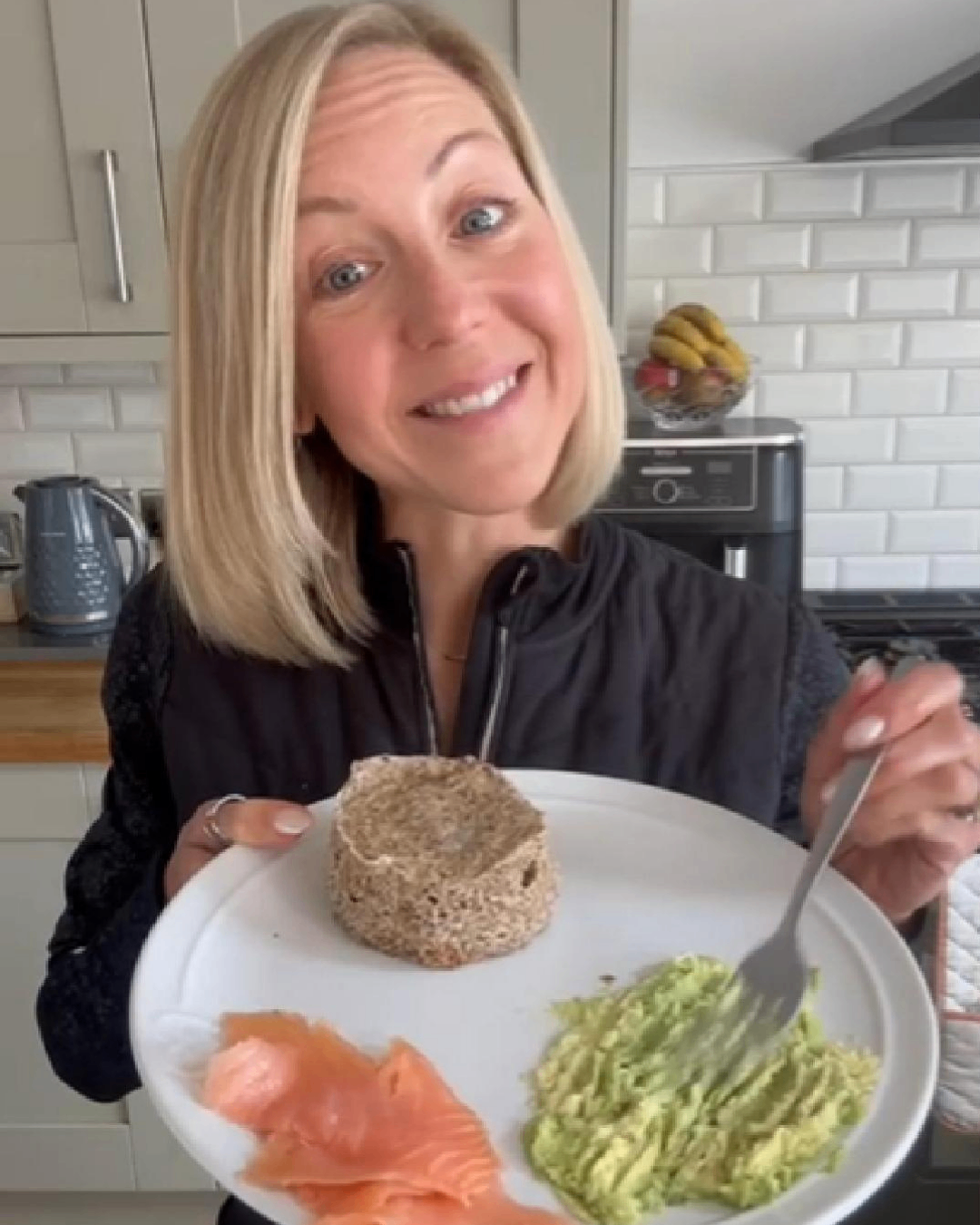
Every time you eat, you need Protein, Fiber, and Fats together. This combination slows glucose absorption, preventing the blood sugar spikes and crashes that trigger fat storage and insatiable hunger.
Here's what it looks like in practice:
When you stabilize your blood sugar, you lower insulin. When you lower insulin, you reduce abdominal fat storage. When you reduce fat storage, you finally start seeing the results that have been eluding you for months (or years).
It's not about perfection. It's about consistency.
The Bottom Line
You haven't failed.
Your body has changed. The rules have changed. And now you need a strategy designed specifically for women navigating perimenopause: not the generic "eat less, move more" advice that stopped working years ago.
As a perimenopause weight gain coach and hormone specialist for women UK, I've seen this transformation happen hundreds of times. Women who felt completely defeated: strangers in their own bodies: finally understanding that this isn't about willpower. It's about working with their hormonal reality instead of fighting against it.
You need personalized support. You need someone who understands the intricate dance between estrogen, progesterone, cortisol, and insulin. Someone who can help you navigate the resistance training, protein targets, and blood sugar strategies that actually move the needle.

That's exactly what my Lean On Lucy 1:1 Coaching program provides. Using my FRESH Framework™, we create a personalized hormone-support strategy that finally addresses the root cause of perimenopause belly fat: not just the symptoms.
Because you deserve to feel at home in your body again.
You deserve to understand what's happening instead of blaming yourself.
And you deserve a plan that actually works.
Ready to reset your hormones and reclaim your body?Book your free consultation here and let's create your personalized roadmap together.
Your body isn't broken. It just needs the right support.
Comments