The ‘Normal’ Blood Test Trap: Why You Still Don’t Feel Like Yourself

You’ve always been the one who holds it all together.
In your career, you’re the go-to person for solving complex problems. At home, you’re the anchor. You’re used to being capable, sharp, and in total control of your schedule.
But lately, something has shifted.
You’re waking up at 3am with your mind racing, even though you were exhausted when your head hit the pillow. You’re finding it harder to recall names in meetings, and that “afternoon slump” has turned into a full-on wall of fatigue that hits you at 3pm.
You’ve been doing everything right. You’ve cleaned up your diet, you’re trying to get to bed earlier, and you’ve even cut back on the evening glass of wine. But your body isn’t responding.
So, you did the sensible thing. You booked an appointment with your GP. You explained the brain fog, the bone-deep exhaustion, and the fact that you just don’t feel like you anymore. They ran some blood tests.
A few days later, the text message or the phone call arrives: "Your blood results are normal."
On the one hand, it’s a relief. Nothing is “wrong.” But on the other hand, it’s incredibly frustrating. If everything is normal, why do you feel so far from it?

(Image description: A professional woman in her late 40s sits in a bright, modern UK home office. She is looking at her laptop screen with a slightly puzzled but determined expression, perhaps holding a cup of herbal tea, reflecting the search for answers despite being told everything is fine.)
The Gap Between 'Normal' and 'Optimal'
The first thing you need to know is this: You are not imagining it.
When a GP looks at your blood test results, they are generally looking for the presence of disease. They are checking if your markers fall within a broad statistical range designed to catch serious clinical conditions.
But there is a massive difference between "not having a disease" and "feeling vibrant and healthy."
Think of it like the MOT for your car. If the car passes, it means it’s legal to drive and won't fall apart on the motorway. It doesn't mean the engine is tuned for peak performance or that it’s a joy to drive.
Standard lab reference ranges in the UK are based on averages. Often, these averages include people who are already struggling with their health. If your results are at the very bottom or the very top of that "normal" range, your doctor might say you're fine, but your body is screaming that it’s not.
For example, your thyroid markers (TSH) might be within the "normal" range, but if they are creeping toward the higher end, you might still experience the classic symptoms of subclinical hypothyroidism: like that stubborn weight gain and the feeling that your brain is moving through treacle.
The Perimenopause Blood Test Myth
If you are a woman in your 40s or 50s, the most common blood test you’ll be offered is for FSH (Follicle Stimulating Hormone). The theory is that if this number is high, you are in menopause.
However, perimenopause is not a linear process. It’s a rollercoaster.
During perimenopause, your hormones don't just gracefully decline; they fluctuate wildly from day to day, and even hour to hour. You could have a blood test on a Tuesday morning that shows perfectly "normal" oestrogen and FSH levels, but by Wednesday afternoon, those levels have crashed or spiked, leaving you feeling anxious, sweaty, and exhausted.
A single blood test is just a snapshot in time. It’s like taking a one-second video of a two-hour film and trying to guess the whole plot. It doesn’t capture the patterns, the rhythms, or the reality of how you feel when you’re trying to lead a board meeting while dealing with a sudden surge of hot flushes.
This is why so many professional women are sent away with a prescription for antidepressants or told that their symptoms are "just stress" or "part of getting older."
You Aren’t ‘Losing Your Edge’
I hear this from my clients all the time: "Lucy, I feel like I'm losing my edge. I used to be so sharp, and now I'm second-guessing myself."
It is incredibly common for women to feel like they are failing at work or at home because their brain feels slower than it used to. You might find yourself forgetting words mid-sentence or losing your train of thought in the middle of a presentation.
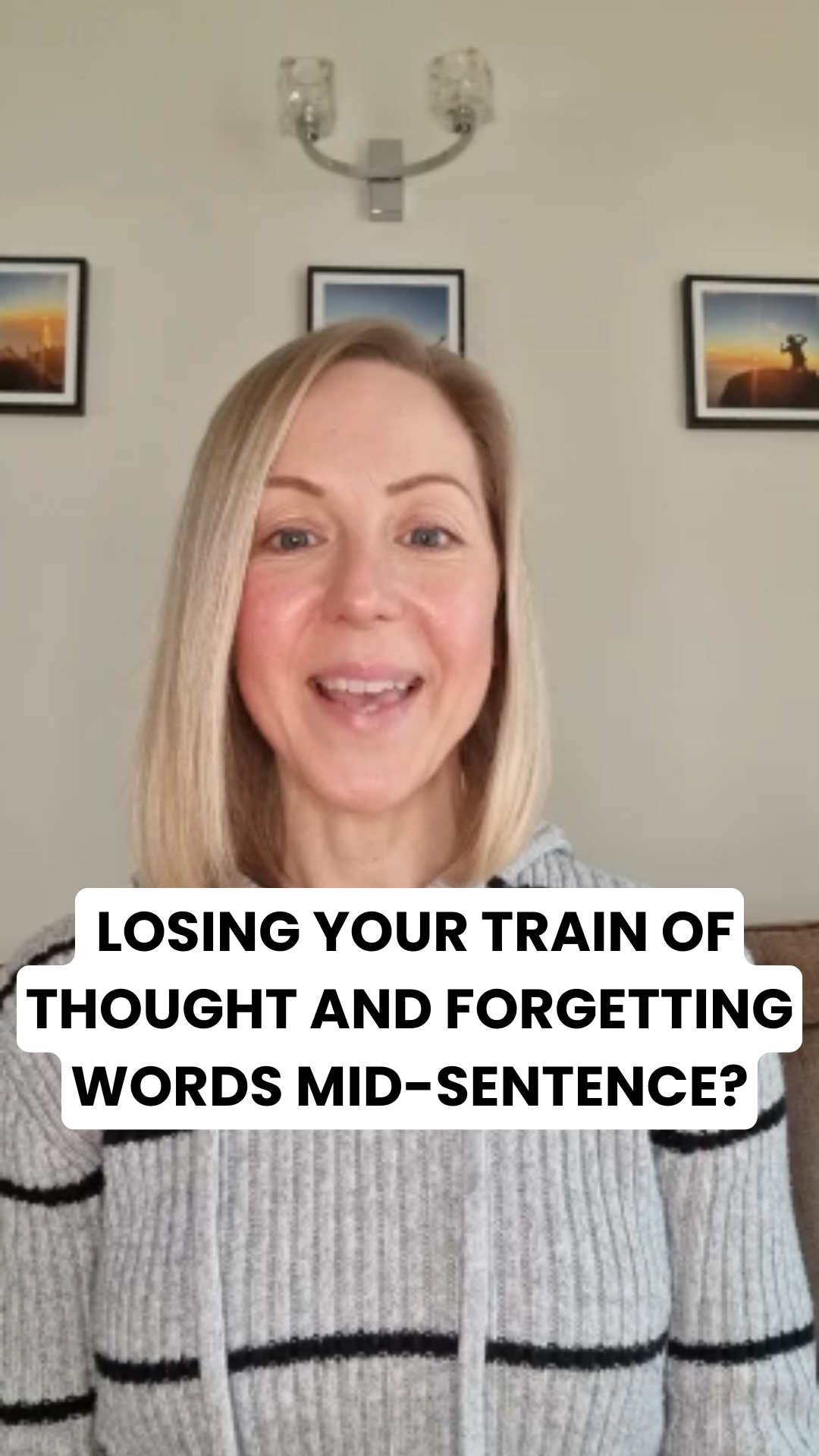
When your blood tests come back normal, it’s easy to start believing the narrative that this is just your new reality. You start to think that maybe this is what 45 or 55 is supposed to feel like.
I am here to tell you: It’s not.
This isn't a willpower problem, and it's not a sign that you're "past it." This is a hormone pattern. Your body is responding to shifts in oestrogen, progesterone, and: crucially: cortisol.
The Hormone REFRESH Method™: Why Symptoms Are Data
In my coaching, we use the Hormone REFRESH Method™. The first and most vital pillar of this method is Review.
We don't just look at a lab report in isolation. We look at the whole picture. Your symptoms are the most sophisticated "data" we have. They are your body’s way of communicating that something is out of balance.
Instead of dismissing symptoms because they don't show up on a standard NHS blood panel, we use them as a map.
If you are waking between 2-4am with a racing heart, that tells us something specific about your cortisol rhythm. If you are bloated by the end of the day, even if you've eaten "clean," that tells us about your digestive fire and insulin response.
The Cortisol-First Approach
Most traditional advice for women struggling with their health focuses on "eat less, move more." But when you are in perimenopause and your nervous system is already stuck in overdrive, more restriction and more intense exercise are the last things you need.
When your cortisol is dysregulated, your body holds onto weight as a safety mechanism. It disrupts your sleep and drives those 3pm sugar cravings.
This is why you feel "wired but tired." Your mind is racing at 11pm, but you’re so exhausted during the day that you’re needing coffee just to function.
We have to address the nervous system before we can address things like weight loss or energy. We need to signal to your body that it is safe.

Moving Beyond the ‘Normal’ Trap
If you’ve been told your results are normal but you still don’t feel like yourself, here is how we start to unpick the mystery:
Track the Patterns: Don't just note that you're tired. Note when you're tired. Is it after lunch? Is it as soon as you wake up?
Look at the Trends: If you have access to private menopause support in the UK, look for practitioners who interpret blood work through an "optimal" lens rather than just a "normal" one.
Prioritise the Nervous System: If you are "constantly switched on," your hormones will never find their balance. This isn't about "relaxing": it's about physiological safety.
Validate Your Experience: Your symptoms are real. You are not "imaging it," and you are not "just stressed." Stress is often the trigger, but the hormonal fallout is very much physical.
From Overwhelmed to Clear
Imagine what it would feel like to wake up feeling actually refreshed, instead of waking up exhausted even after a full night's sleep.
Imagine having steady energy through the day, without the 3pm crash that has you reaching for the biscuits.
Imagine clearer thinking at work, where you can lead with the confidence you’ve spent decades building.
This isn't about finding a "magic pill." It's about understanding your unique hormone pattern and giving your body what it actually needs: not what a generic fitness plan or an outdated blood reference range says it needs.
Your body feels different right now because it is different. The rules have changed. And when the rules change, we need a new playbook.
Take the Next Step
You don’t have to keep trying to "white-knuckle" your way through this. You’ve done the hard work of holding everything together for everyone else. Now, it’s time to look at what you need to feel like yourself again.
If you’re ready to look beyond the "normal" blood test trap and get to the root cause of your brain fog, fatigue, and 3am wake-ups, let's talk.
We can look at the whole picture: your symptoms, your lifestyle, and your history: to create a plan that actually works for the woman you are today.

Book your Clarity Call here and let’s figure out exactly what’s going on, together.
Comments